

Preserve the Things That Tell Your Family’s Story—One Step at
a Time
If you’ve been trusted with inherited family photos, letters, textiles, or the little odds and ends that tell a story, you’re in the right place.
Archivist-informed guidance showing families how to preserve and add meaning to inherited materials, translated into clear, practical steps.
Grounded in professional archival best practices.
Certified Archivist • MSLS • Society of American Archivists member
Start with one simple step.
Know what to do before you sort anything.
Open boxes, drawers, and envelopes without making mistakes you can’t undo.
For those ready to explore the full process.
You’ve Been Trusted with Something Special.
Now What?
When the boxes, albums, envelopes, quilts, and small treasures end up with you, it’s usually not by accident. Someone thought of you. Someone trusted that you would see their value and take care of them.
A family archive is never a perfectly matched set. It is a collection of real things from real lives. Some pieces are delicate. Some are unexpected. Some feel instantly familiar. Every single one belongs to a larger story.
Keeping the Past is here to help you make sense of what you have and show you how to care for it in a thoughtful, practical way. The goal is not perfection. It is creating an archive that feels meaningful now and is ready to be passed on later.
That is exactly what the First Pass Guide is here to help you do.
Family Items Age with Time.
Care Makes a Difference.
Paper yellows. Fabric weakens. Photographs fade. These changes happen slowly and quietly. They are simply part of the life of physical materials.
Sometimes there is more than age at play. You might find photos stuck together, a brittle envelope, or a letter with a tear. You might even notice a choice you made years ago that’s causing damage. That happens more often than people admit.
The good news is this. The story is not gone. What matters most is what you do next.
Archivists rely on small, thoughtful actions to protect collections every day. Those principles work just as well at home.
It starts with how to look at what’s in front of you.
Get the First Pass Guide.
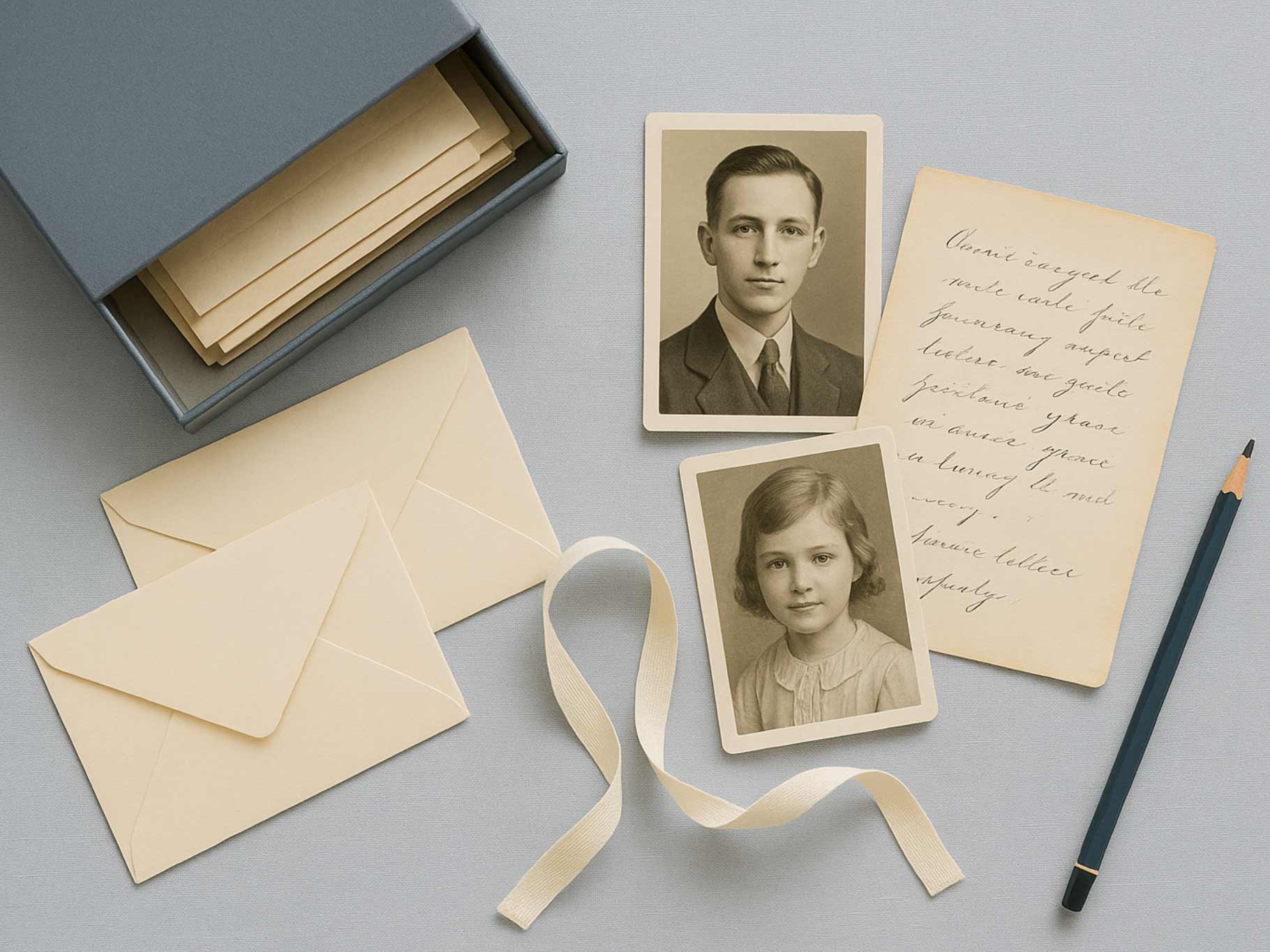
Family Items Age with Time.
Care Makes a Difference.
Paper yellows. Fabric weakens. Photographs fade. These changes happen slowly and quietly. They are simply part of the life of physical materials.
Sometimes there is more than age at play. You might find photos stuck together, a brittle envelope, or a letter with a tear. You might even notice a choice you made years ago that’s causing damage. That happens more often than people admit.
The good news is this. The story is not gone. What matters most is what you do next.
Archivists rely on small, thoughtful actions to protect collections every day. Those principles work just as well at home.
It starts with how to look at what’s in front of you.
Get the First Pass Guide.
How Keeping the Past Helps
Keeping the Past shows families how to care for their photos, papers, and keepsakes using the same methods professional archivists rely on, explained clearly and without technical jargon.
The process follows a simple, logical path that helps families:
- care for family materials using professional archival practices
- take practical actions that fit real homes and real collections
- turn a box of mixed, disconnected items into something you can understand, organize, and truly appreciate
The result is clarity, confidence, and a system you can return to over time.

You Don’t Need to Do Everything.
You Just Need to Begin.
Most people delay starting because life is full and the project feels huge. It is easy to assume you need long, uninterrupted stretches of time to make any real progress. Or that once you open the box, you will be committing yourself to something you have to finish all at once.
More good news! Small deliberate increments matter. When you know what the first step is, you can move at a pace that fits your life. You can start small, without signing yourself up for a massive, all-consuming project.
Each time you come back to the box, it feels a little more familiar. With clear, well-explained steps, the process moves forward. And along the way, you get to slow down and appreciate the story that is already there.
Because They Carry More Than Memories
There is something quietly powerful about holding an original photograph or a handwritten letter. The weight of the paper. The ink on the page. The fabric someone chose and used. These are real things, made and handled by real people.
They give you a physical connection to someone you may never have met. They connect you to the people who came before you in a way no digital file ever can.
That’s why the first step matters so much.
Practical archiving guidance, delivered to your inbox
Each issue includes updates about the latest blog posts and courses, one practical archiving tip, and occasional free resources available only to subscribers—checklists, guides, and tools you won’t find anywhere else on the site.
Short, useful, and worth your time.
A Path that Brings Everything into Focus
The process begins by stabilizing what you have. Nothing fancy. Just enough care to protect materials while you take stock.
From there, you begin to notice how pieces belong together. A photograph makes more sense alongside a letter. A program naturally stays with the medal from the same day. The connections start to reveal themselves.
Before long, items fall into natural groupings. Families. Time periods. Life chapters. Trips, milestones, and everyday moments.
Once those groupings are clear, building a simple system becomes straightforward.
Each step leads naturally to the next.
And before you know it, you are caring for your family’s history with confidence and even enjoying the process.
The First Pass is where it begins.

A Path that Brings Everything into Focus
The process begins by stabilizing what you have. Nothing fancy. Just enough care to protect materials while you take stock.
From there, you begin to notice how pieces belong together. A photograph makes more sense alongside a letter. A program naturally stays with the medal from the same day. The connections start to reveal themselves.
Before long, items fall into natural groupings. Families. Time periods. Life chapters. Trips, milestones, and everyday moments.
Once those groupings are clear, building a simple system becomes straightforward.
Each step leads naturally to the next.
And before you know it, you are caring for your family’s history with confidence and even enjoying the process.
The First Pass is where it begins.
A Method You Can Trust
You do not need a degree in archives to do this well.
The Family Archive Blueprint™ is a complete, archivist-informed process built around care, context, and long-term preservation.
It works whether you are opening the box for the very first time or bringing lasting order to a collection you have lived with for years.

Hi, I’m Pamela. I teach Family Archiving from both sides of the table.
Before I ever learned archival methods at the graduate level, I was simply the person who was handed the family boxes.
When I began studying how archivists protect and organize materials, I realized families could do the same thing with the right guidance.
The methods weren’t complicated. They were just unfamiliar.
People just needed it to be explained in a clear, practical way.
Everything at Keeping the Past is shaped by that experience.
• A preservation-first approach based on real archival practice
• Steps that work in real family collections
• Guidance from someone who has been exactly where you are
When You’re Ready, Here’s What Comes Next
every step.
If you’re new here, the blog is a great place to begin. You’ll find friendly guidance and
practical tips.
You Weren’t Expected to Know This Already
Most families inherit materials without instructions.
Good preservation starts with knowing how to handle materials safely and keep their context intact.
Keeping the Past gives you that understanding.
The First Pass Guide shows you how to begin without guessing.
Or try an even smaller step.
3 Basic Steps to Take Now
Short, practical things you can do today that make a real difference.
Know what to do next—and what can wait
Each issue includes updates about the latest blog posts and courses, one practical archiving tip, and occasional free resources available only to subscribers—checklists, guides, and tools you won’t find anywhere else on the site.