
Finally, a clear way to preserve and make sense of the photos, papers, and keepsakes your family saved.
If you’ve inherited boxes and albums and aren’t sure what to do next, the Family Archive Blueprint™ gives you a clear path to follow—from the very first step all the way to a finished family archive.
This is Stage 1 of the six-stage Family Archive Blueprint™.
Free download. The first steps that matter.

Finally, a clear way to preserve and make sense of the photos, papers, and keepsakes your family saved.
If you’ve inherited boxes and albums and aren’t sure what to do next, the Family Archive Blueprint™ gives you a clear path to follow—from the very first step all the way to a finished family archive.
This is Stage 1 of the six-stage Family Archive Blueprint™.
Free download. The first protective steps.
You’re Not the Only One
If you’re staring at boxes of photos, papers, letters, textiles, or memorabilia…
If you’ve hesitated because a wrong move could do real damage…
If you’ve delayed starting because there was no obvious first step…
You’re not alone—and you’re not behind.
Most families inherit the materials but not the method. No one taught you how to protect old photographs, how to sort mixed materials, or how to decide what to keep.
The Blueprint exists for that exact gap. It shows you what comes first, what can wait, and the best order in which to work.
HERE’S HOW IT WORKS
Introducing the Family Archive Blueprint™
The Family Archive Blueprint™ is the entire process for turning a mixed, inherited collection into something that’s preserved, organized, and meaningful.
It is not a decluttering system.
It is not a photo-only workflow.
And it is not professional jargon dropped into your lap.
It’s a six-stage process families can follow at home, using supplies that are easy to find and steps that build on each other.
You don’t need to digitize everything first.
You don’t need specialty skills.
You just need a place to begin—and a path to follow.
Here’s the full path, so you can see where you’re headed.
The Six Stages of the Blueprint

Stage 1: Stabilize Before You Categorize
You’ll learn how to stabilize what you have, spot risks, and take the first protective steps.
It’s easy to skip this step. This stage tells you exactly what to do first.

Stage 4: Buy Once. Store Right.
You’ll learn what supplies you actually need, how to house different materials, and how to avoid overbuying.
Practical choices. Professional results.
Stage 2: Keep Together What Belongs Together
You create simple, temporary groupings so related materials stay connected.
No fine sorting. No big decisions.
Just enough structure to see what’s actually there.
Stage 5: Save the Story, Not Just the Stuff
Every item has a person or a moment behind it. You record the context so future generations understand the meaning.
Names, relationships, moments.
This is how objects become history instead of leftovers.
Stage 3: Simple Structure that Sticks
Now you build an organizing framework that makes your collection usable.
This is where clarity replaces guessing. This is where things start to take shape.
Stage 6: Plan It. Protect It. Pass It On.
This is where everything comes together into a usable family archive.
You’ll make a simple roadmap, plan for long-term stewardship, and ensure your work outlives you.
The Six Stages of the Blueprint
Stage 1: Stabilize Before You Categorize
You’ll learn how to stabilize what you have, spot risks, and take the first protective steps.
It’s easy to skip this step. This stage tells you exactly what to do first.
Stage 2: Keep Together What Belongs Together
You create simple, temporary groupings so related materials stay connected.
No fine sorting. No big decisions.
Just enough structure to see what’s actually there.
Stage 3: Simple Structure that Sticks
Now you build an organizing framework that makes your collection usable.
This is where clarity replaces guessing. This is where things start to take shape.
Stage 4: Buy Once. Store Right.
You’ll learn what supplies you actually need, how to house different materials, and how to avoid overbuying.
Practical choices. Professional results.
Stage 5: Save the Story, Not Just the Stuff
Every item has a person or a moment behind it. You record the context so future generations understand the meaning.
Names, relationships, moments.
This is how objects become history instead of leftovers.
Stage 6: Plan It. Protect It. Pass It On.
This is where everything comes together into a usable family archive.
You’ll make a simple roadmap, plan for long-term stewardship, and ensure your work outlives you.
BUILT DIFFERENTLY
What Makes This Different
There are plenty of ways to organize photos and plenty of household organizing systems.
Very few were designed for mixed family collections or long-term preservation.
The Blueprint is different because it’s grounded in archival principles and built for the collections families actually inherit.
Practical. Achievable. Purpose-built.
You’ll learn:
-
- How to avoid the mistakes families often make without realizing it
- What matters most for long-term preservation
- How to organize without getting stuck
- What to do when stories are missing
- How to work at your own pace, in short sessions, and still make progress
BUILT DIFFERENTLY
What Makes This Different
There are plenty of ways to organize photos and plenty of household organizing systems.
Very few were designed for mixed family collections or long-term preservation.
The Blueprint is different because it’s grounded in archival principles and built for the collections families actually inherit.
Practical. Achievable. Purpose-built.
You’ll learn:
-
- How to avoid the mistakes families often make without realizing it
- What matters most for long-term preservation
- How to organize without getting stuck
- What to do when stories are missing
- How to work at your own pace, in short sessions, and still make progress
Quick Wins
You don’t need a free weekend or a perfect setup.
Small actions make real progress:
-
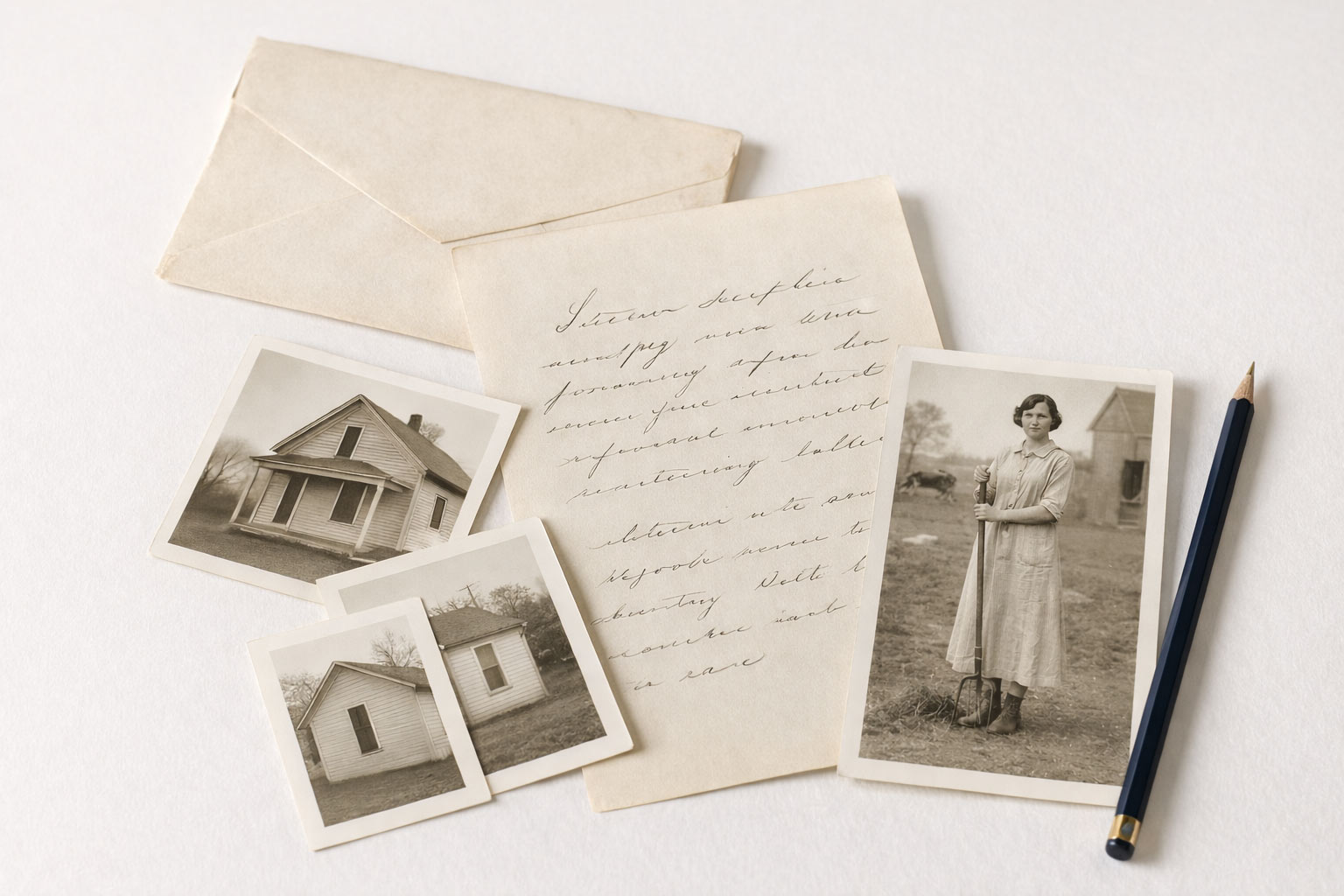
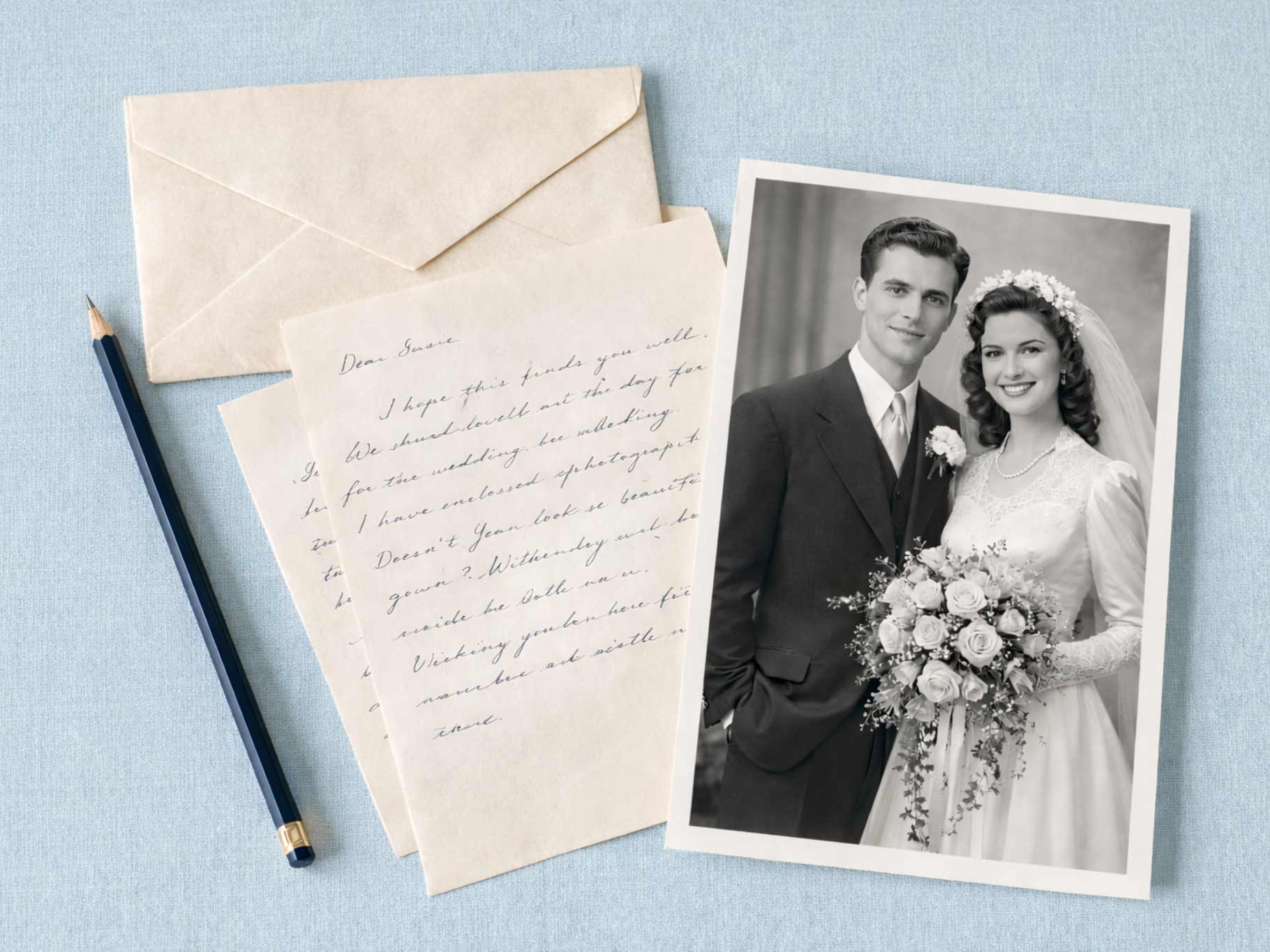
- Remove letters from envelopes and store them together
- Gently flatten folded papers
- Label the backs of photos with a soft pencil
- Designate one safe workspace
- Jot down how the items came to be in your care
These aren’t busy tasks.
They’re quietly essential.
If you want your first win today, Stage 1 is where to begin.
Stage 1 of the six-stage
Family Archive Blueprint™
What’s Possible for Your Family
When you follow this path, your family archive becomes something usable—not just something stored.
You’ll know:
-
- What you have
- Where it is
- How to protect it
- How it fits together
- Why it matters
You’ll be able to find a photo in seconds.
You’ll handle fragile items with confidence.
Your family will understand the stories behind what they’ve inherited.
And most importantly, you’ll have the peace of mind that comes from knowing the things entrusted to you are safe.
Step One is where this clarity starts.
Stage 1 of the six-stage Family Archive Blueprint™
Your Starting Point
Choose the option that best matches where you are right now.
If You Just Inherited Everything
The First Pass Guide walks you through the first protective steps before you sort a single item.
If You’re Ready to Take Action
Begin with Stage 1 of the Blueprint when the course opens.
Courses release quarterly starting in 2026.
If You Want the Full Picture
See how all six stages connect and what each one covers.
This is the complete roadmap.
Questions, Answered
Is the Blueprint a course?
The Blueprint is the full process.
The courses teach the detailed steps inside each stage.
Do I need a lot of supplies to begin?
No. You’ll start with basic materials—just a few folders, pencils—and a safe workspace. You’ll learn exactly what’s worth investing in later.
What if everything is a mess?
That’s expected. The Blueprint was built for real collections, not curated ones.
Can I start even if I work full-time?
Yes. The stages are designed to be done in short sessions, at your own pace. You can stop at any point in the process and feel good about the progress you’ve made.
Do I need to digitize everything?
No. The Blueprint teaches you how to preserve physical materials. You can digitize anything at any point in the process if you choose. It’s your call.
Is this genealogy?
No. This is about preserving and organizing physical materials. However, your family archive will complement your family history work.
This Is Where It Gets Interesting
Your family saved these things for a reason.
Not everyone would take responsibility for them. You did.
You don’t need a full weekend or a perfect space.
You just need a clear sequence.
The Family Archive Blueprint™ gives you that map, grounded in professional standards and built for real life.
Family Archive Blueprint™
Less guessing. More “oh, that makes sense.”
Practical family archiving ideas and resources, delivered monthly.