
I’m Pamela Mayer.
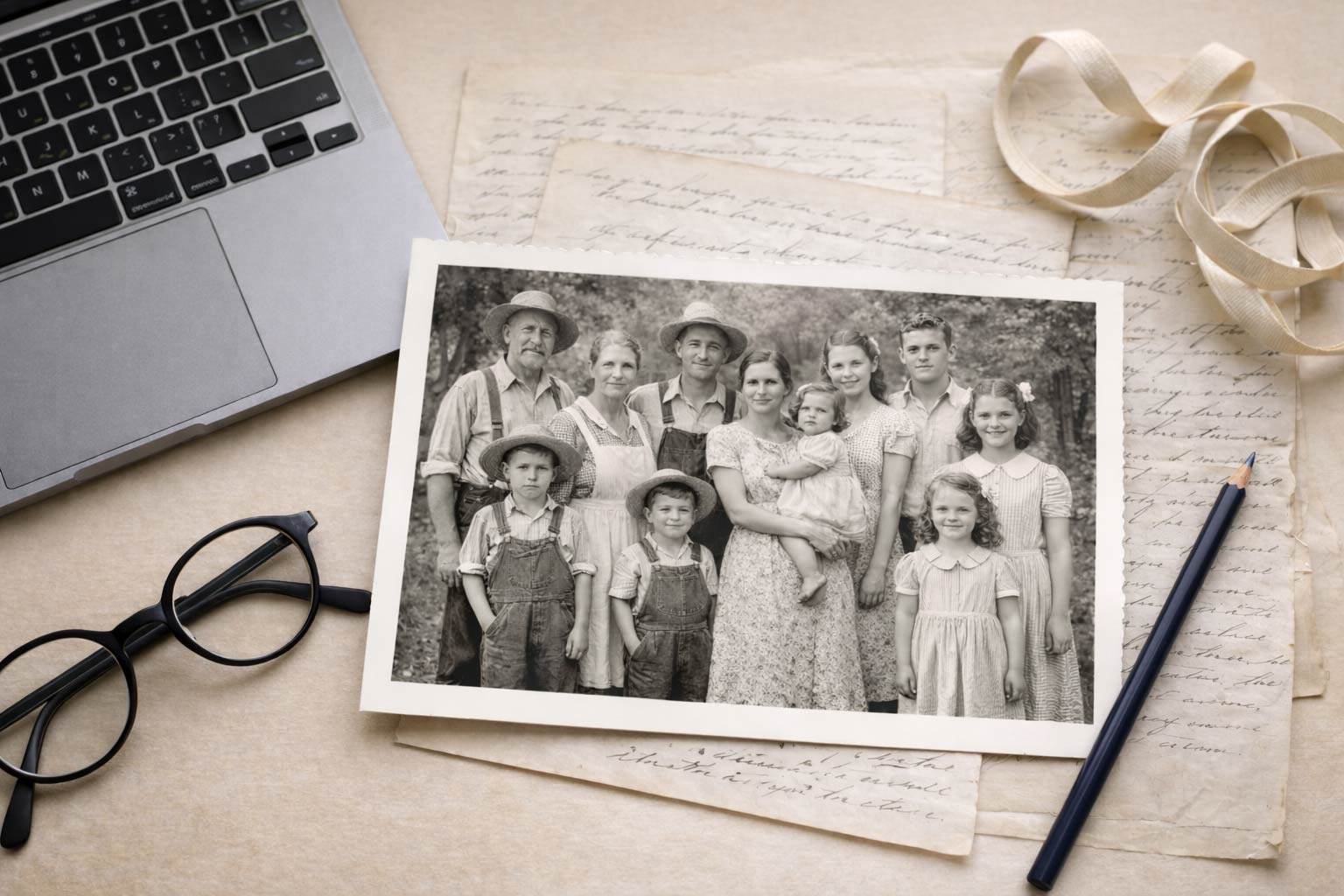
I love sharing how people can care for the photos, papers, and keepsakes that tell their family’s unique story.
If you’ve inherited a treasure of tangible items from your family’s history, you probably already feel the privilege of it—even if everything arrived in a mix of envelopes, boxes, and albums.
You don’t need to turn it into a museum or write a book.
You just need the right guidance to steward what you’ve been given.
There is a clear process for caring for family archives and I’ve built all of my guidance around it.
I’m Pamela Mayer.
I love helping people care for the photos, papers, and keepsakes that tell their family’s unique story.
If you’ve inherited a treasure of tangible items from your family’s history, you probably already feel the privilege of it—even if everything arrived in a mix of envelopes, boxes, and albums.
You don’t need to turn it into a museum or write a book.
You just need the right guidance to steward what you’ve been given.
There is a clear process for caring for family archives and I’ve built all of my guidance around it.
You’re the Keeper of the Flame.
You’re the lucky one.
The family materials landed with you because someone trusted you to appreciate them.
Old photographs, certificates, letters, military papers, passports, clippings, notes—pieces of lives lived long before yours—and now they’re in your care.
You want to keep everything safe and make sure your family understands why these things matter.
You want the next generation to see value, not “old stuff.”
That’s exactly why I founded Keeping the Past.
What I Do & How I Help
Families often think they need a giant plan, special equipment, or a perfect system before they can start.
You don’t.
My job is to take the mystery out of family archiving.
I show you how to care for your materials the way a professional archivist would—but with methods that actually work in a real home.
I help you recognize what you have, protect it, give it context, and bring it into workable order.
Simple steps. Solid reasoning. Smart choices that honor your people.
And the best part? You get to enjoy the process of uncovering your family’s story while you do it.
My Archival Education & Experience
I’m a Certified Archivist and hold a Master of Science in Library Science from UNC–Chapel Hill, where my graduate work included archival studies and a professional field experience in digital archives.
I received the Society of American Archivists Pease Award, and my master’s paper was published in The American Archivist.
I’ve also built a full institutional archive for a pre-K through 12 school—from the ground up, on a shoestring. That project taught me how to evaluate risk, make smart preservation decisions, and stretch a budget without sacrificing standards.
When it comes to family archives, I bring the same mindset:
-
- Make wise choices
- Use the right supplies
- Take steps that protect materials for the long haul
It doesn’t matter if you have one box or twenty; the principles are the same.
My Archival Education & Experience
I’m a Certified Archivist and hold a Master of Science in Library Science from UNC–Chapel Hill, where my graduate work included archival studies and a professional field experience in digital archives.
I received the Society of American Archivists Pease Award, and my master’s paper was published in The American Archivist.
I’ve also built a full institutional archive for a pre-K through 12 school—from the ground up, on a shoestring. That project taught me how to evaluate risk, make smart preservation decisions, and stretch a budget without sacrificing standards.
When it comes to family archives, I bring the same mindset:
-
- Make wise choices
- Use the right supplies
- Take steps that protect materials for the long haul
It doesn’t matter if you have one box or twenty; the principles are the same.
My Story
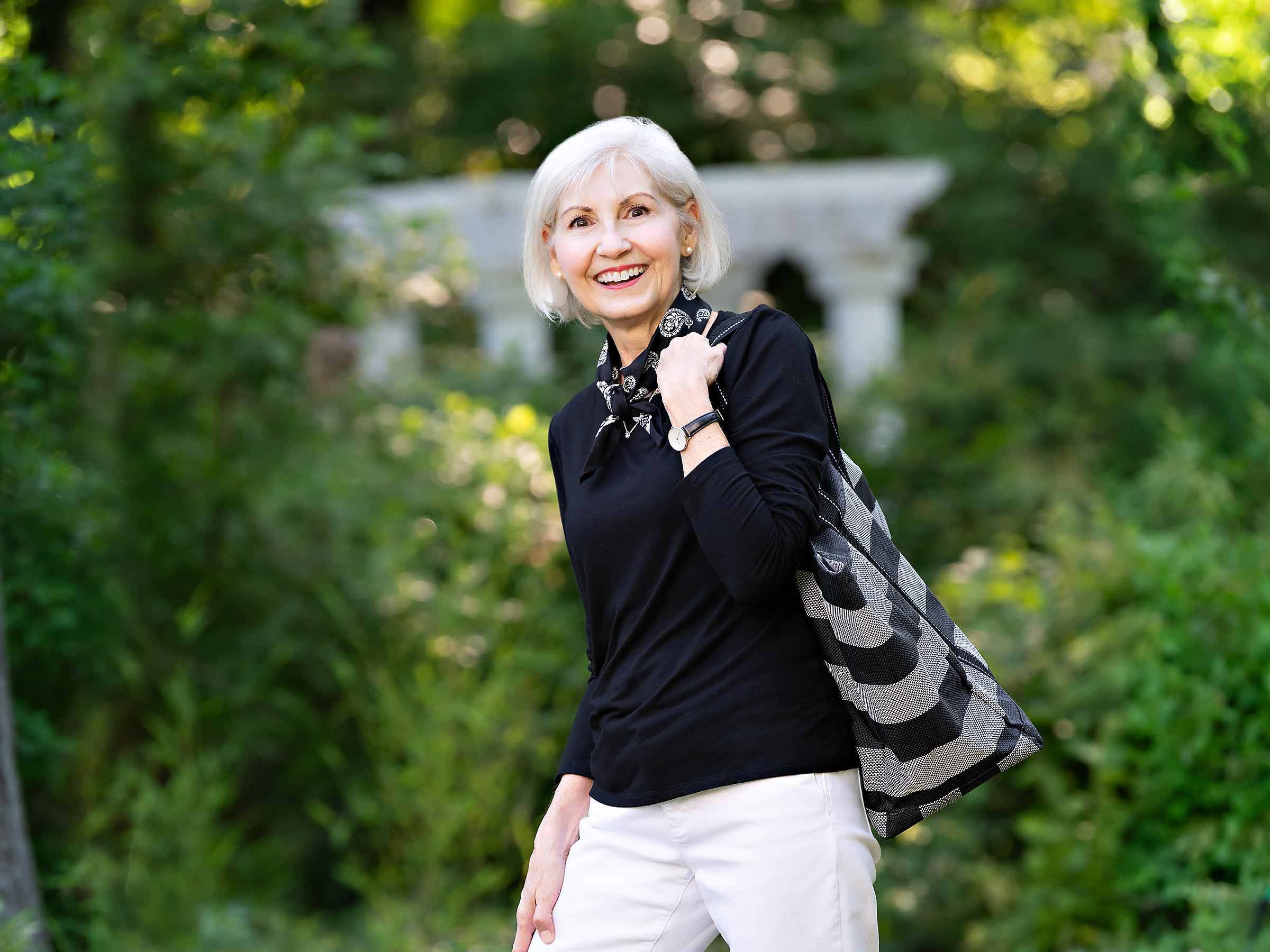
My love for archiving started early.
When I was nine years old, I used my allowance at a family reunion silent auction to “win” a copy of a photograph of my great-great-great-grandparents standing proudly on the porch of their log cabin. I still have it, and I still smile every time I see it.
That little moment kicked off a lifelong fascination with photos, papers, and the way ordinary items quietly carry extraordinary history.
I’ve taken week-long courses at IGHR (Institute of Genealogy and Historical Research), SLIG (Salt Lake Institute of Genealogy), and GRIP (GRIP Genealogy Institute)—truly some of my happiest learning experiences.
In 2016, I completed Advanced Methodology and Evidence Analysis and later attended Gen-Fed (Genealogical Institute on Federal Records) for a deep dive into records at the National Archives.
Yes, the National Archives is my Disney World.
The Family History Library in Salt Lake City is my Disneyland.
Both make me feel like a kid in the world’s most magical places.
All of that training shaped my belief that every family deserves to have the physical evidence of their history preserved with care.
And that everyday people—not just institutions—should have access to the knowledge that makes it possible.
Why Family Archives Matter
Family archives are time capsules.
They hold the evidence of a family’s identity, decisions, movements, challenges, and joys.
A photograph can capture a personality.
A letter can reveal a voice.
A document can trace a journey across geography or generations.
When you protect these items and add the context that helps others understand them, you’re building something far more meaningful than storage. You’re creating a family resource the next generation can actually use, appreciate, and enjoy.
That’s the heart behind Keeping the Past.
How We Can Work Together
There are a few different ways we can stay connected and work together.
COURSES
My courses offer guided support for caring for family photos, papers, and keepsakes using professional principles and methods.
They are designed to:
- break the process into manageable stages
- explain what matters at each point
- help you make confident decisions without overthinking
THE BLOG
The blog is where I explore the many sides of family archives—the practical, the historical, and the deeply human.
You’ll find reflections, examples, and small pieces of archival wisdom woven in along the way. Some posts discuss hands-on family archiving. Others simply help you see what you already have with fresh eyes.
THE NEWSLETTER
The newsletter is how I stay in touch.
Subscribers receive:
- notifications when new blog posts are published
- a practical archivist’s tip
- links to free resources
I offer limited one-on-one consulting for special situations that benefit from private guidance.
You can inquire through the Contact page.
Less guessing. More “oh, that makes sense.”
Practical family archiving ideas and resources, delivered monthly.