The Importance of Recognizing Origins in Your Family’s Inherited Items
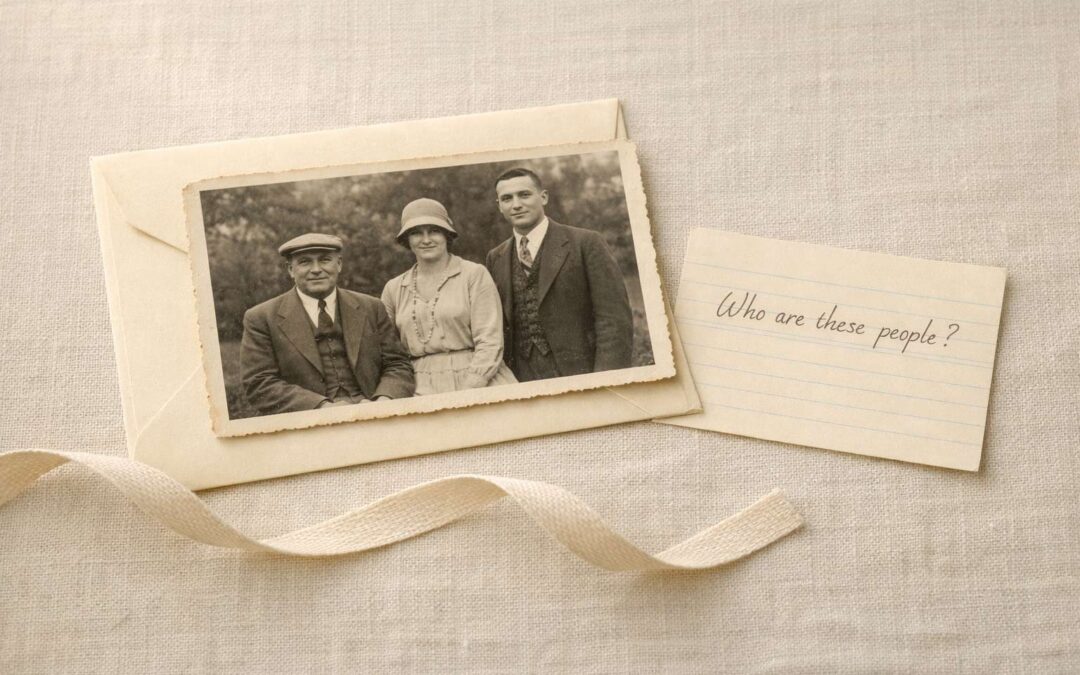
There’s a photograph sitting in a box somewhere that is in perfect condition. No fading. No tears. Whoever kept it, kept it carefully—through decades of moves, estate cleanouts, and the general chaos of things being handed from one person to the next.
And it is completely useless to anyone who comes after.
Not because the image is gone. Because the story is. No name on the back. No date. No one living who knows who this person was or why the photograph was worth keeping in the first place.
The object survived. The context didn’t make the trip.
This is the part of family archiving that blindsides people—usually when they’re standing in front of a box full of strangers.
You’re Not Just Keeping Objects. You’re Keeping Evidence.
Most people think preservation means physical protection. Keep it dry. Keep it flat. Don’t let it yellow.
That’s part of it—but an archivist thinks about something else entirely: context. Where did this come from? Who held it before? How did it arrive here?
This is the mindset shift that changes everything about how you approach inherited materials.
A photograph without provenance—the documented history of where something came from and how it got to you—is a record with a hole in it. A letter without any sense of its origin is harder to read, harder to place, harder to pass on.
The object exists. The story is what gives it weight. And preservation that protects the object while losing the story has only done half the job—the easier half.
Once you see that distinction, you can’t unsee it. You start looking at inherited materials differently. Not just as things to protect, but as evidence that can still be read and understood. For the next person. And the one after that.
Why Origins Get Lost—And Why It’s Nobody’s Fault
Nobody loses context on purpose.
Sometimes it was never recorded at all—no one wrote it down while they still could.
And sometimes it disappears in transitions—estate sales, moves, the well-meaning sorting that happens in the weeks after someone dies, when everyone is busy and the boxes need to go somewhere. Items get consolidated. Envelopes get discarded. The note that explained everything gets separated from the thing it was explaining.
This is where family archives quietly fall apart. Not through neglect. Through ordinary disruption.
The items survive. Their story doesn’t travel with them. And by the time anyone thinks to ask, the people who knew are gone, or the details have blurred past the point of usefulness.
Naming this isn’t about blame. It’s about recognizing that preserving context is a distinct act—one that requires a specific decision. It doesn’t happen automatically. It happens because someone decided it mattered.
If You’re Wondering What Comes First
If this is helping you see what you’re already holding, the next question is usually what to do first.
What “Origins” Actually Means—And What’s Worth Noting
Origins aren’t just names and dates. They’re about relationship, sequence, and memory. Here’s what that actually looks like in practice:
- Who originally owned or created the item
- How it passed from person to person before reaching you
- The approximate time period or life chapter it belongs to
- Any connection to a specific event, place, or relationship
- What the person who gave it to you said about it—even casually, even in passing
- Why it was kept in the first place, if anyone knows
You won’t always have all of this. Some of it is already gone. But what you do know—even partial, even uncertain—is worth capturing now, while the people who might remember are still reachable.
A guess with a question mark attached is more useful than silence.
Context Is What Future Generations Actually Inherit
Here’s what most people don’t realize until it’s too late: without context, inherited collections don’t get treasured by the next generation.
They get disposed of. Not out of carelessness. Out of the absence of information. Someone inherits a box of strangers and makes a perfectly practical decision.
The person doing this work right now—noting where things came from, capturing what they know, keeping the story attached to the object—is the reason the collection survives the next inheritance. Not an exaggeration. Just how this works.
Connections between objects fade. The further you get from the original owners, the less anyone can explain what they’re looking at.
A collection with strong provenance can be understood, added to, and appreciated by people who never met the original owners.
This is the part of archiving that produces no visible result. No tidy box. No labeled folder. Just a collection that means something to people who weren’t there—because someone made sure it could.
Origins are what let a collection grow in meaning rather than shrink. Most people don’t realize they’re losing that—incrementally, invisibly—until it’s already gone.
The Moment You’re In Right Now
Memory is still accessible. Context still exists. The people who could answer questions—or at least fill in partial answers—may still be reachable. That changes faster than anyone expects.
This is the moment. Not to organize. Not to sort. Just to notice what you know and write it down before it moves out of reach.
Practical archiving guidance, delivered to your inbox
Each issue includes updates about the latest blog posts and courses, one practical archiving tip, and occasional free resources available only to subscribers—checklists, guides, and tools you won’t find anywhere else on the site.
Short, useful, and worth your time.